The Untold Stories of Kidepo
The Untold Stories of Kidepo Valley National.P: Culture, People, and History
Kidepo Valley lies in the far north-eastern corner of Uganda within the Karamoja region, close to the borders of South Sudan and Kenya. Renowned for its dramatic scenery and sense of isolation, Kidepo is one of Uganda’s most remote and unspoiled destinations. The region is approximately 700–750 km from Kampala, making it ideal for travelers seeking an authentic off-the-beaten-path experience.
Access and Routes:
Kidepo can be reached by road or air. Common road routes include Kampala – Karuma – Gulu – Kitgum – Kidepo, and an alternative eastern route via Kampala – Mbale – Moroto – Kotido – Kaabong – Kidepo. It is also accessible from Gulu or Kitgum through Kaabong, and from Moroto or Kotido in eastern Karamoja. For quicker access, scheduled and charter flights operate from Entebbe International Airport or Kajjansi Airfield to Kidepo Airstrip, taking about two hours.
Climate, Temperature, and Seasons:
Kidepo Valley has a semi-arid climate with warm to hot days. Average daytime temperatures range between 25°C and 35°C, while evenings and early mornings can be cool, especially from June to August.
The dry season (September to March) is the best time for wildlife viewing and travel, as roads are more passable and animals gather around water sources. During the wet season (April to August), the landscape turns lush and green, offering beautiful scenery, though some roads may become challenging.
Beyond its natural beauty, Kidepo is defined by its people and their traditions, which have been shaped by the land and climate over centuries.
History of the Kidepo Valley Region
The history of Kidepo Valley is closely tied to movement, adaptation, and survival. For generations, the area formed part of a wide pastoral zone linking present-day Uganda, South Sudan, and Kenya. Communities migrated seasonally in search of pasture and water, developing a lifestyle well suited to the dry environment.
The ancestors of the Karamojong, a Nilotic-speaking people, gradually settled in the region. Cattle became central to their lives, representing wealth, identity, and spiritual value. Cycles of drought and competition for resources shaped a strong communal culture and the need for cooperation and defense. During colonial rule, Karamoja remained largely isolated. The creation of fixed borders disrupted traditional grazing patterns and increased pressure on resources. In 1962, Kidepo Valley National Park was established, altering settlement and land-use practices. While conservation helped protect wildlife, it also changed how local communities related to the land.
In recent years, improved security, better infrastructure, and community-based tourism have brought positive change. Tourism now plays an important role in supporting livelihoods while preserving cultural and natural heritage.
The People of Kidepo Valley
The region around Kidepo is mainly inhabited by the Karamojong, particularly the Dodoth clan living near the park. They are traditionally pastoralists, and livestock especially cattle remain at the heart of social, economic, and cultural life. Cattle influence marriage, social status, and community relationships.
In the Morungole Mountains live the Ik people, one of Uganda’s most distinctive ethnic groups. Originally hunters and gatherers, the Ik adapted to small-scale farming due to environmental change and displacement. Their language, customs, and mountain lifestyle make them culturally unique.
Culture and Traditions
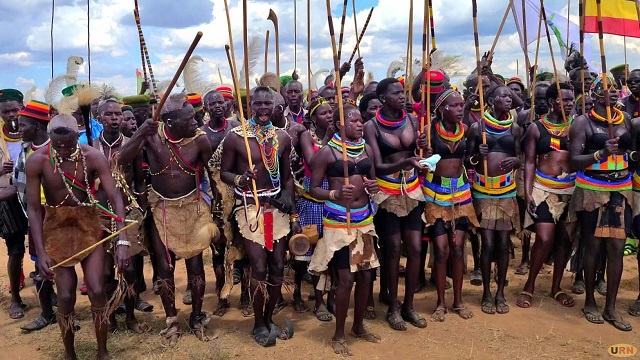
Karamojong society is community-based and organized through age sets. Elders are highly respected and guide decision-making, while younger men traditionally took on protective roles. Knowledge, values, and history are passed down orally through stories and shared experiences.
Music and dance are central to cultural expression. Men perform energetic jumping dances, while women lead rhythmic songs with clapping and chanting. Traditional adornment includes colorful beads, necklaces, and bangles worn to show identity, age, and social standing.
Daily life centers on manyattas (traditional homesteads), livestock care, and communal activities. Meals often based on milk, meat, and sorghum are shared, reinforcing unity and cooperation.
Cultural Experiences for Visitors
Visitors to Kidepo can take part in guided cultural village visits, offering insight into traditional homes, daily routines, food preparation, storytelling, and dance. Excursions to the Ik communities in the Morungole Mountains provide a rare opportunity to learn about a mountain culture shaped by isolation and resilience.
Kidepo Valley is not only a wildlife destination but a living cultural landscape. Its remote setting, distinct climate, rich history, and resilient communities give it a unique identity. By engaging with the people and understanding their past, visitors gain a deeper appreciation of Kidepo, turning a safari into a meaningful cultural journey through one of Uganda’s most authentic regions.
Plan Your Kidepo Adventure with Us
we specialize in tailor-made trips to Kidepo Valley, combining unforgettable wildlife experiences with authentic cultural encounters. Our expert guides ensure safe, seamless travel, whether by road or air, and help you connect meaningfully with the local communities.
Make early booking and enjoy with Eshande safaris